
I offer multiple engagement models from workshops to rapid assessments to comprehensive commercialization strategy.
Longer engagements are designed with built-in decision gates so you control the investment while I de-risk your journey. Here are examples crafted for different clients based on their needs, timelines, and budgets
Review and refinement of your pharma or investor pitch, working with one company at a time.
This is where a new client relationship starts. A fixed scope, a fixed price, and at most a few weeks of focused work on the one thing standing between you and your next conversation.
The Problem: Your deck makes sense to you and to your team. It does not land with a pharma reviewer or an investor, and nobody tells you why. Generic pitch coaching does not close the gap, because the questions a pharma buyer asks are not the questions an investor asks, and neither set is obvious from the outside.
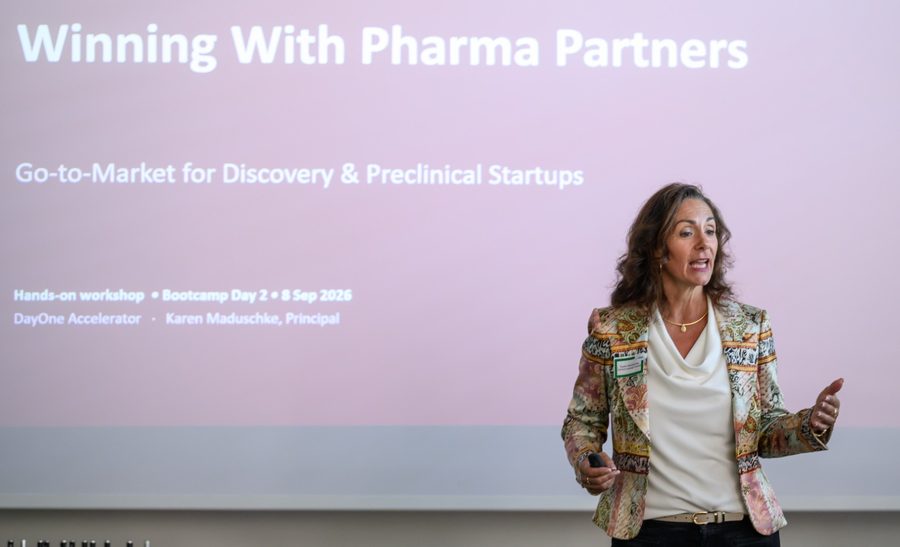
The Format: Six hours in sessions of one to two hours each. You learn the same frameworks I teach in accelerator and incubator workshops, take the tools away, and do the work on your own deck between meetings. I review what you bring back and we refine it together. Everything is built around your actual pitch rather than a template.
Best For: founders preparing for pharma conversations or a raise who want senior review of their materials, without committing to a full strategy engagement.
Diagnose the gap between "we have a product" and "pharma will buy it."
The Problem: Most health tech founders think they're further along than they are. They spend 12-18 months chasing pilots before realizing they're missing critical requirements—validation packages, compliance certifications, integration capabilities—that pharma actually demands.
The Solution: A rapid, comprehensive assessment that tells you exactly where you stand. No sugarcoating. No generic frameworks. Specific gaps, prioritized recommendations, and realistic timelines based on years of pharma market experience.
Best For: Early-stage health tech companies preparing for first pharma pilots, or growth-stage companies hitting unexpected resistance in enterprise sales.
Take a Quick Self-Assessment →Full-scale market entry strategy with built-in decision gates.
The Problem: You need more than a readiness assessment—you need a complete go-to-market strategy. But you also can't afford to commit to a the full 6-9 month engagement without knowing it's working.
The Solution: A three-phase engagement with decision gates after each phase. You can stop at any checkpoint with deliverables in hand. No lock-in, no wasted investment. Engagement durations dependent on product complexity, organizational readiness, and client response times.
Decision Gate: Continue or stop with actionable audit report.
Decision Gate: Continue or stop with market strategy document.
Best For: Health tech companies with initial product-market validation seeking systematic pharma market entry, or companies repositioning after failed initial attempts.
Fast-track specific capabilities when time is critical.
The Problem: You don't have 6-9 months. You have investor pressure, a competitive window, or a specific opportunity that requires immediate action on a particular capability.
The Solution: Modular engagements focused on your highest-priority need. Choose one module or combine several based on your timeline and budget.
Target identification, outreach strategy, pitch development, and negotiation support to land your first 2-3 pharma pilots.
Differentiation strategy against established and emerging benchmark competitors. Win themes and battle cards.
Document how your solution integrates into pharma clinical operations workflows. Critical for stakeholder buy-in.
GDPR compliance, EMA considerations, DACH region go-to-market strategy, and local partnership development.
Value-based pricing strategy, enterprise licensing models, and negotiation frameworks for pharma procurement.
Design the delivery infrastructure to match your commercial ambition — implementation workflows, client onboarding processes, resource planning, and team scaling roadmaps. So when you land that Top 20 pharma contract, you can actually deliver on it.
Best For: Companies with specific, time-sensitive needs who know exactly what capability gap they need to close.
Operational leadership or strategic guidance on an ongoing basis.
The Problem: You need experienced strategic, commercial, or operational leadership embedded in your team but can't justify (or afford) a full-time CxO. Or you've completed a strategy engagement and want ongoing guidance as you build internal capacity and execute.
The Solution: Two engagement models based on your needs:
Part-time executive leadership for scale-stage companies. Typically 2-3 days per week, focused on strategy, operations, or commercialization per defined needs. Includes:
Monthly strategic guidance without operational involvement. Typically 4-8 hours per month. Includes:
Best For: Scale-stage health tech companies (Series A+) needing experienced executive leadership or strategic guidance without full-time commitment.
Start with a conversation. Let's get to know each other in an initial introductory call. We'll discuss where you are on your unique journey and which engagement model makes sense. If it feels like we're a fit to work together, I'll submit a written proposal for you to review with your team, board, or investors as appropriate. We can still renegotiate scale from there.
Schedule a CallRunning an accelerator, incubator or conference program? I also deliver workshops and masterclasses for groups of founders.